Serang Raya University and Syekh Yusuf Al Makassari University Gowa Train Students to Manage Budgets and Record Personal Finances
JPPM Editorial Team 3 min read 10 views
Serang, November 14 2026 – After the lunch break, Smart Gen Z Literacy Training participants returned to the Zoom room for the fifth session. The III National Collaborative PkM activity, organized by the Research and Community Service Network (JPPM) together with collaborating universities, was attended by 103 participants out of 208 registrants.
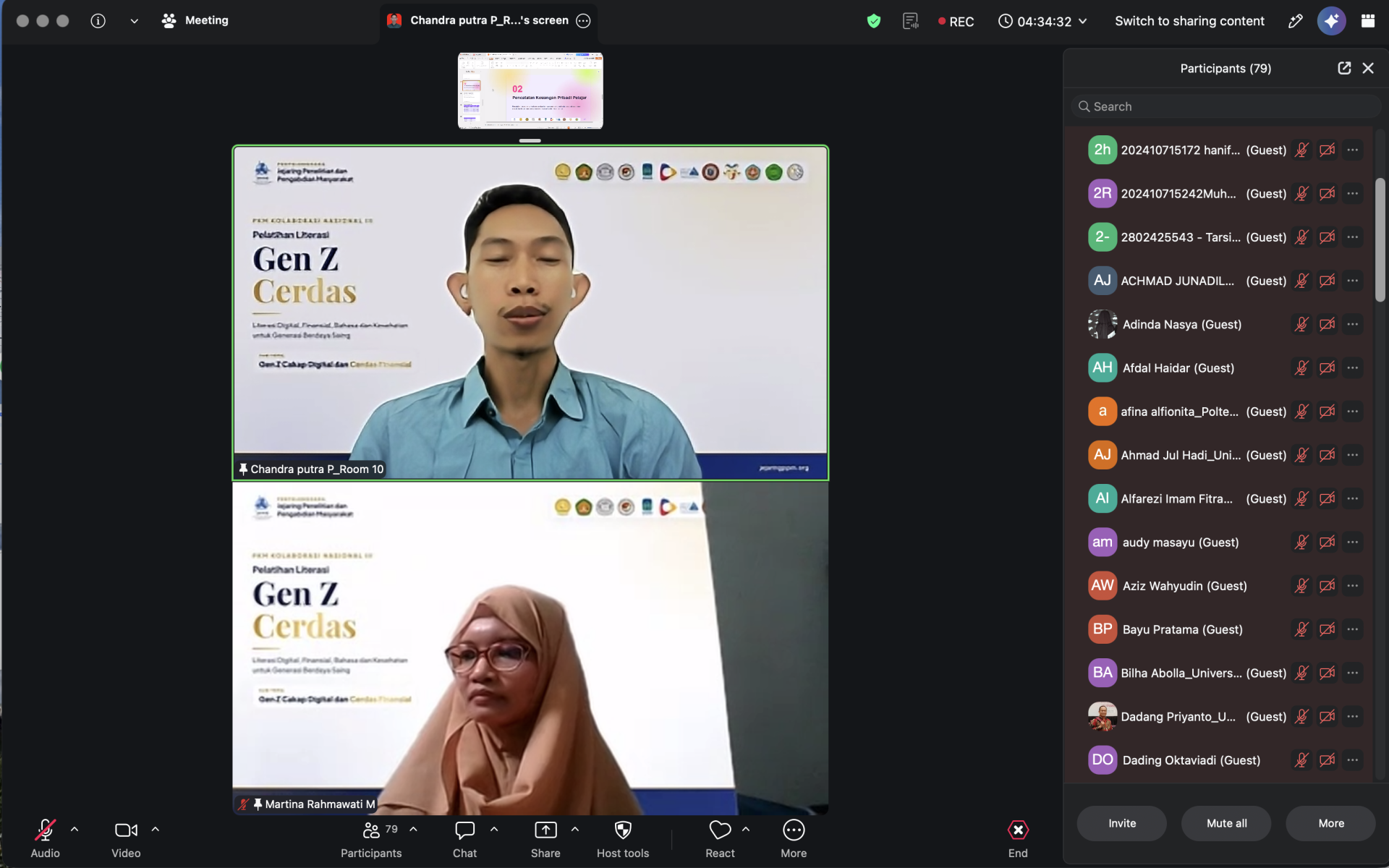
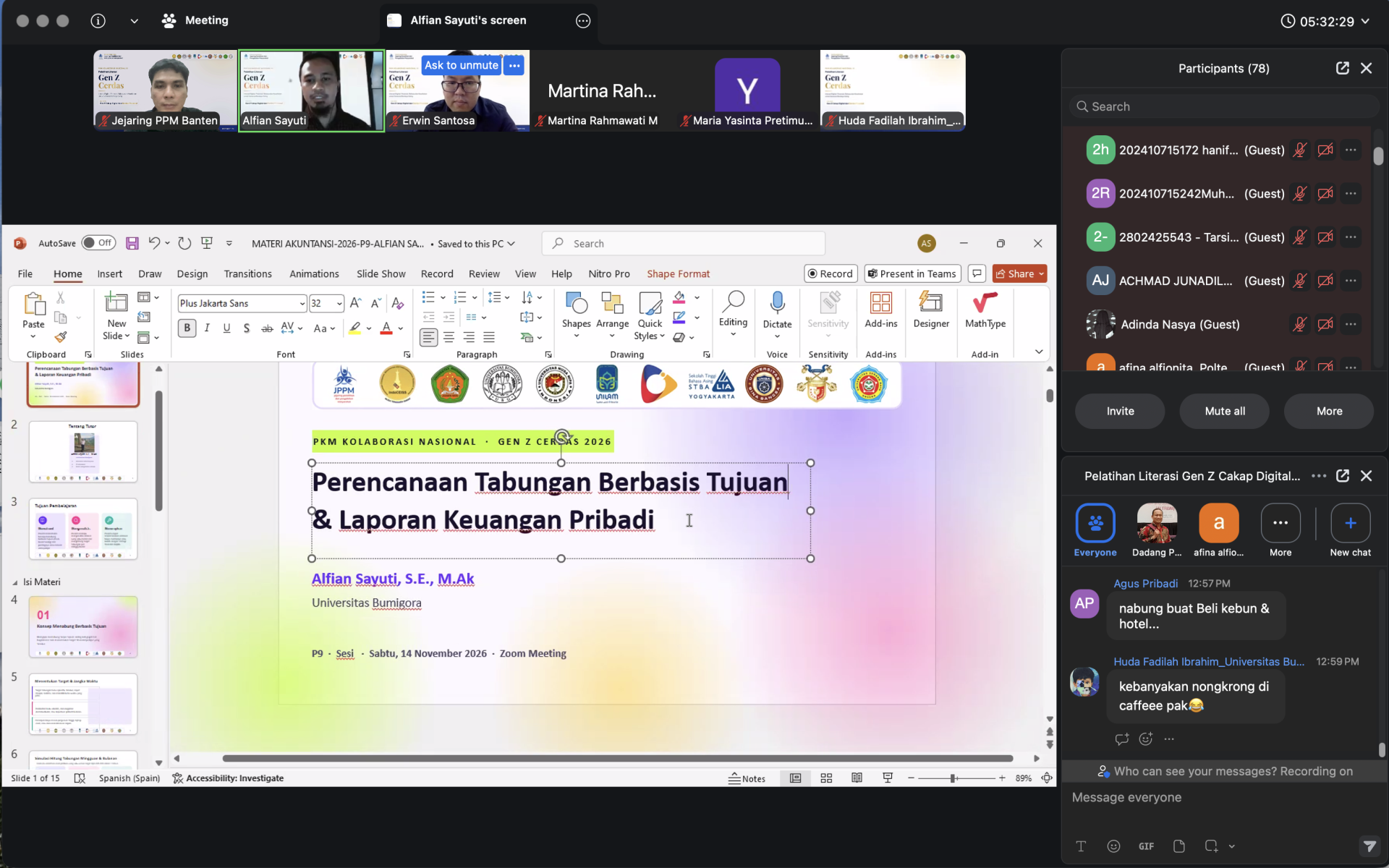
This session presents material "Budget Management and Student Personal Financial Recording" presented by Martina Rahmawati Masitoh, S.E., M.Sc. from Serang Raya University and Chandra Putra Puspita, S.E., M.M. from Syekh Yusuf Al Makassari University Gowa. This collaboration between two campuses from Banten and South Sulawesi is a real illustration of the spirit of cross-regional service.
Martina Rahmawati Masitoh has been a lecturer in the Management Study Program, Faculty of Economics and Business, Serang Raya University since 2013. She took a Bachelor of Management at Yogyakarta State University and a Master of Management at Gadjah Mada University. His research mostly examines digital consumer behavior, such as impulse purchases in online shopping and live streaming, issues that are very close to the shopping habits of the younger generation. Chandra Putra Puspita is a lecturer at the Management Study Program at Syekh Yusuf Al-Makassari University, Gowa and an online tutor at the Open University, a graduate of the Master of Management at Hasanuddin University. He taught Financial Management, Entrepreneurship and Business Ethics courses, and had a career at PT Bank Mandiri, an experience that enriched discussions about practical money management.
The material opens with a question familiar to many students: why does pocket money often run out prematurely? The resource person explained that many students are trapped in unwise consumption patterns, for example buying impulsively because of trends or discounts. Participants were also introduced to the latest economic phenomena such as lifestyle downgrades and "mantab" or eating savings, as a reminder that expenses need to always be adjusted to income.
Participants then learn to differentiate needs and wants through everyday examples. Food, stationery, and data packages for studying are necessities, while daily viral drinks, new stationery even though the old ones are still decent, or subscriptions to applications that are rarely used are desires. The resource person then introduced the 50-30-20 budget method, namely 50 percent for needs, 30 percent for wants, and 20 percent for savings, complete with daily, weekly and monthly budget simulations that can be adjusted to each condition.
The second part discusses recording personal finances. Through the example of a simple cash book, participants learn to record every income and expense, calculate balances, and separate savings. The interviewee emphasized the importance of evaluating every end of the week: whether the largest expenditure was for needs or wants, whether pocket money was sufficient, and whether the savings target was achieved.
The Sari case study is an interesting topic of discussion. Sari receives an allowance of IDR 150,000 per week for transportation and meals at school, but often buys viral matcha drinks and tops up games. On the fourth day, his pocket money was almost gone and he had not saved anything at all. Participants are invited to identify the main problems, sort out Sari's expenses, and formulate ways to manage their pocket money.
The session ended with a short quiz: when should you set aside savings? The correct answer, namely when receiving pocket money, summarizes the main message of this session. The resource person closed with four practical steps: identify income, prepare a budget, record every transaction, and evaluate regularly.
Serang, 14 November 2026 – The Smart Gen Z Literacy Training Series entered its final session late in the afternoon. National Collaborative PkM Activity III which was held...
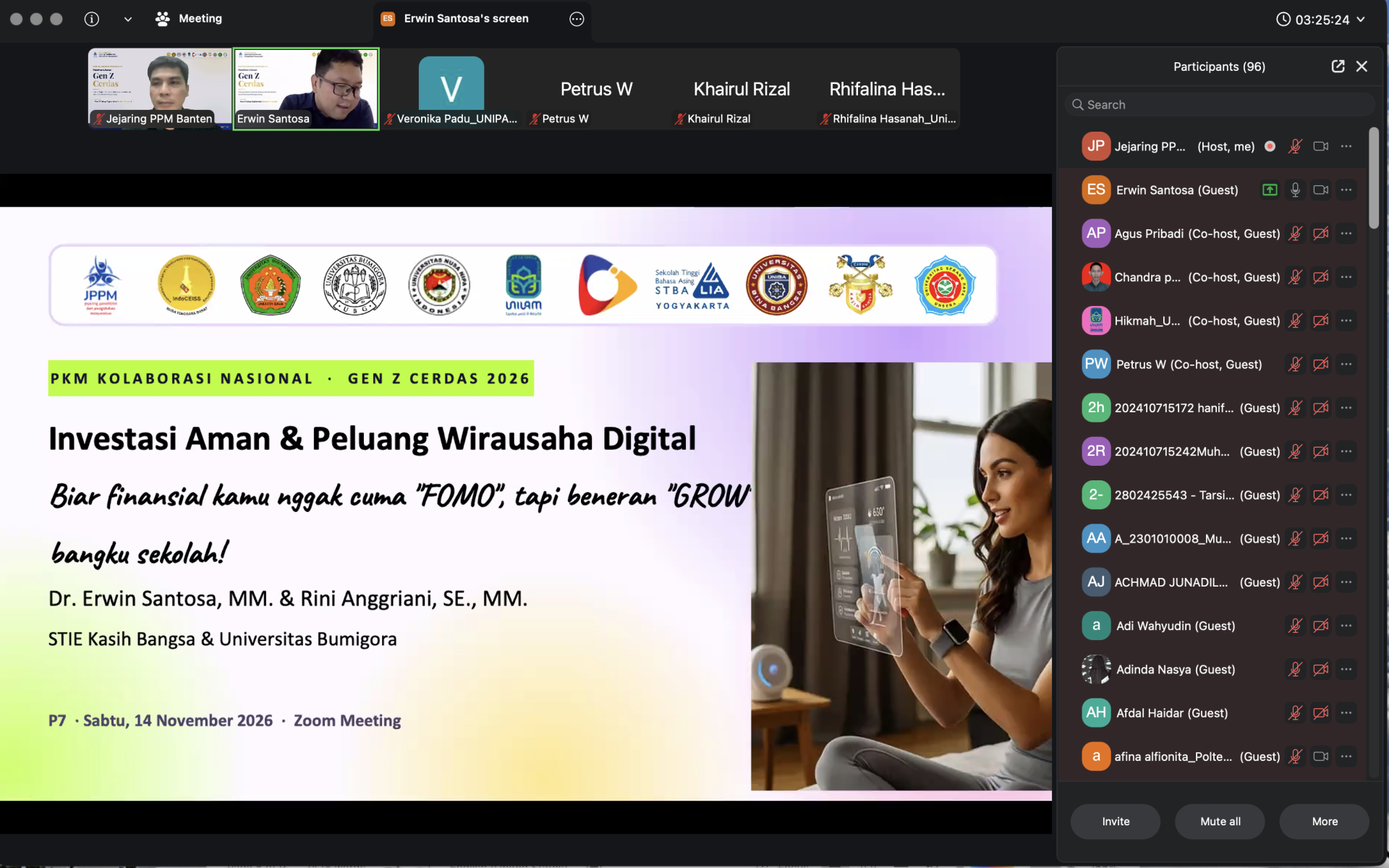
Serang, 14 November 2026 – "So that your finances don't just have FOMO, but actually GROW since school!" The invitation opened the fourth session of Gen Z Literacy Training...
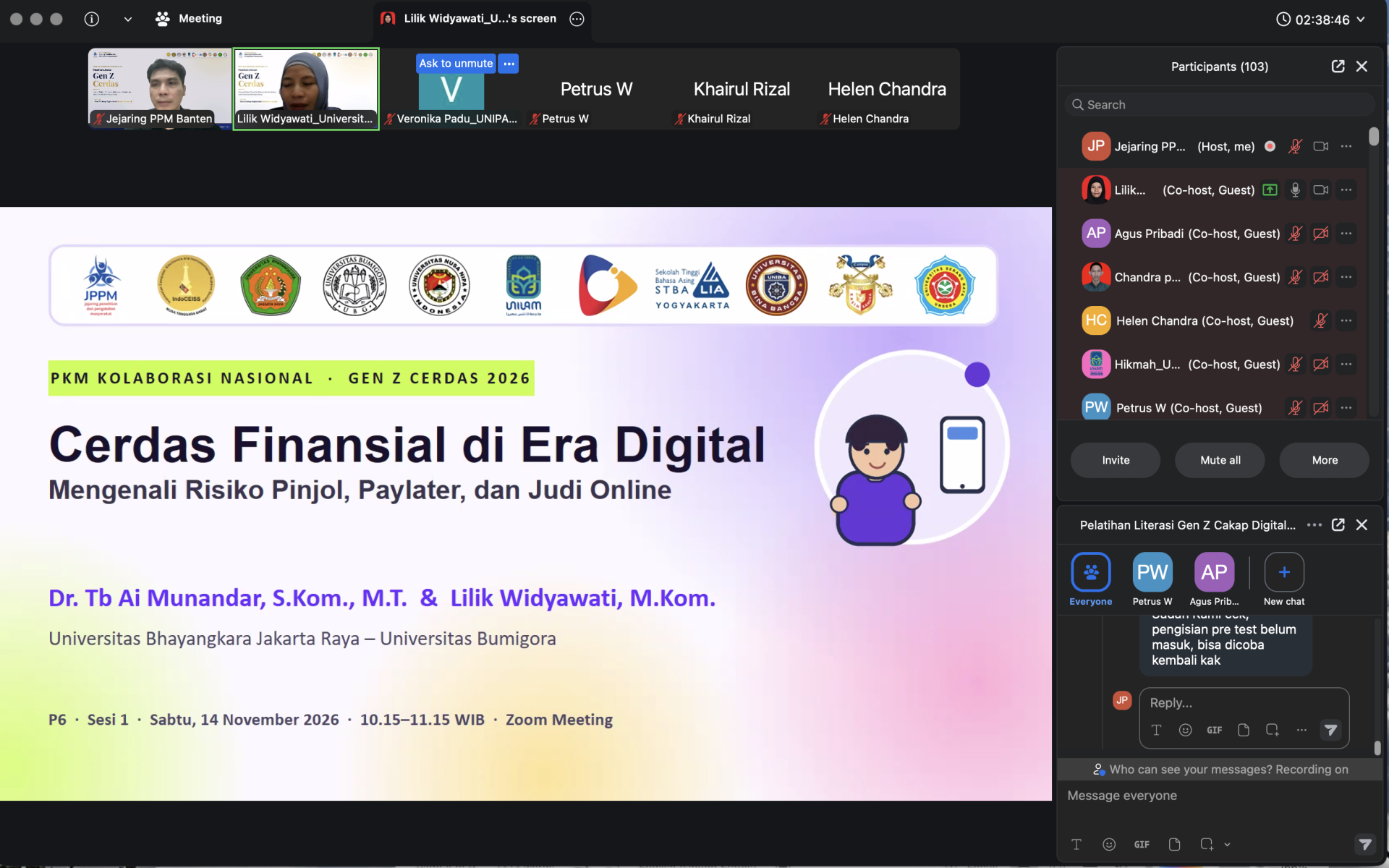
Serang, 14 November 2026 – "Easy to get, hard to let go." That sentence became the common thread of the third session of Smart Gen Z Literacy Training, National Collaborative PkM activities...