Bhayangkara University, Greater Jakarta and Bumigora University Explain the Risks of Pinjol, Paylater and Online Gambling for Students
JPPM Editorial Team 3 min read 14 views
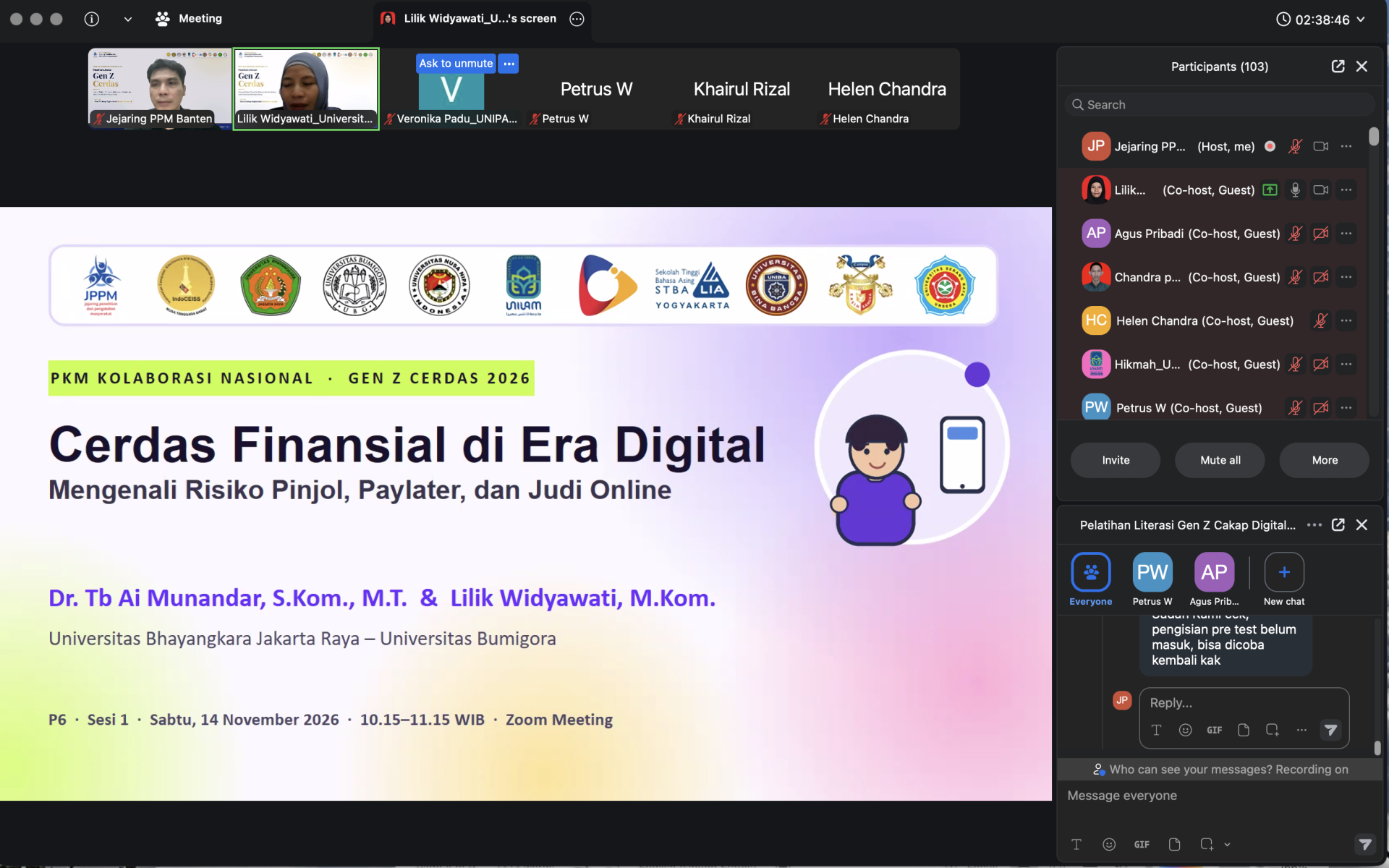
Serang, 14 November 2026 – "Easy to get, hard to get off." This sentence became the common thread in the third session of the Gen Z Smart Literacy Training, a National Collaborative PkM activity III organized by the Research and Community Service Network (JPPM) with collaborating universities. The training, which took place online via Zoom Meeting, was attended by 103 participants out of 208 registrants.
Materials "Underlining the Risks of Online Loans, Paylater, and Online Gambling for Students" presented by Dr. Tb Ai Munandar, S.Kom., M.T. from Bhayangkara University Greater Jakarta and Lilik Widyawati, M.Kom. from Bumigora University.
Dr. Tb Ai Munandar is a lecturer at Bhayangkara University, Jakarta Raya with a background in computer science and the Chair of JPPM, who has been active in driving cross-campus research and service activities. Lilik Widyawati has been a permanent lecturer in the Informatics Study Program at Bumigora University since 2019 with a focus on data and information security expertise, especially cryptography and steganography. This graduate of Bachelor of Information Engineering at the University of Muhammadiyah Malang and Master of Information Technology at the Islamic University of Indonesia holds CEH (Certified Ethical Hacker) certification and is active in researching network security, malware analysis and digital forensics. This cyber security background is very suitable for dissecting how illegal loan applications and online gambling sites work which often misuse user data.
The session opened with a trigger question: have participants ever received the message "cash in five minutes, just KTP", "checkout now, pay next month", or "deposit of ten thousand can become one million"? From there, participants are invited to differentiate between needs and desires, and understand how the FOMO lifestyle and flexing on social media can encourage someone to go into debt for the sake of prestige.
The interviewee then compared legal loans registered and supervised by the OJK with illegal loans. Legal pinjols have interest limits and are only allowed to access the camera, microphone and location, while illegal pinjols often ask for access to all contacts and galleries and then charge with terror. Through a Rp. 1 million loan simulation, participants see directly the difference in costs between the two. The discussion continues on how paylater works, including interest, late fees, minimum user age rules, and its impact on credit history at SLIK OJK which can affect future credit applications.
In the second part, participants are invited to understand why online gambling is addictive: the lure of small wins at the start, the illusion of "almost winning", random rewards that trigger dopamine, and the urge to chase losses. The resource person also explained PPATK data regarding the large turnover of online gambling funds and the involvement of children and teenagers, then explained the impact of online gambling and lending from an economic, family, social and legal perspective.
Two illustrative case studies strengthen participants' understanding. The first case tells the story of Raka, a class The second case tells the story of Dinda, a third semester student who was tempted by the "gacor slot" link, won at the start, then lost her boarding money and borrowed from several loans to recover her capital. Participants discuss at what point they should stop and who they can ask for help.
The session ended with the STOP formula for rejecting an invitation (Stop for a moment, Ask and check, Talk to a trusted person, Choose an alternative), information on help channels such as Contact OJK 157 and aduankonten.id, as well as a short quiz about the characteristics of loans illegal. The right answer, requests access to all contacts and gallery, as well as a reminder for participants to be more alert before downloading the loan application.
Serang, 14 November 2026 – The Smart Gen Z Literacy Training Series entered its final session late in the afternoon. National Collaborative PkM Activity III which was held...
Serang, 14 November 2026 – After the lunch break, the Smart Gen Z Literacy Training participants returned to the Zoom room for the fifth session. National Collaborative PkM Activities III...
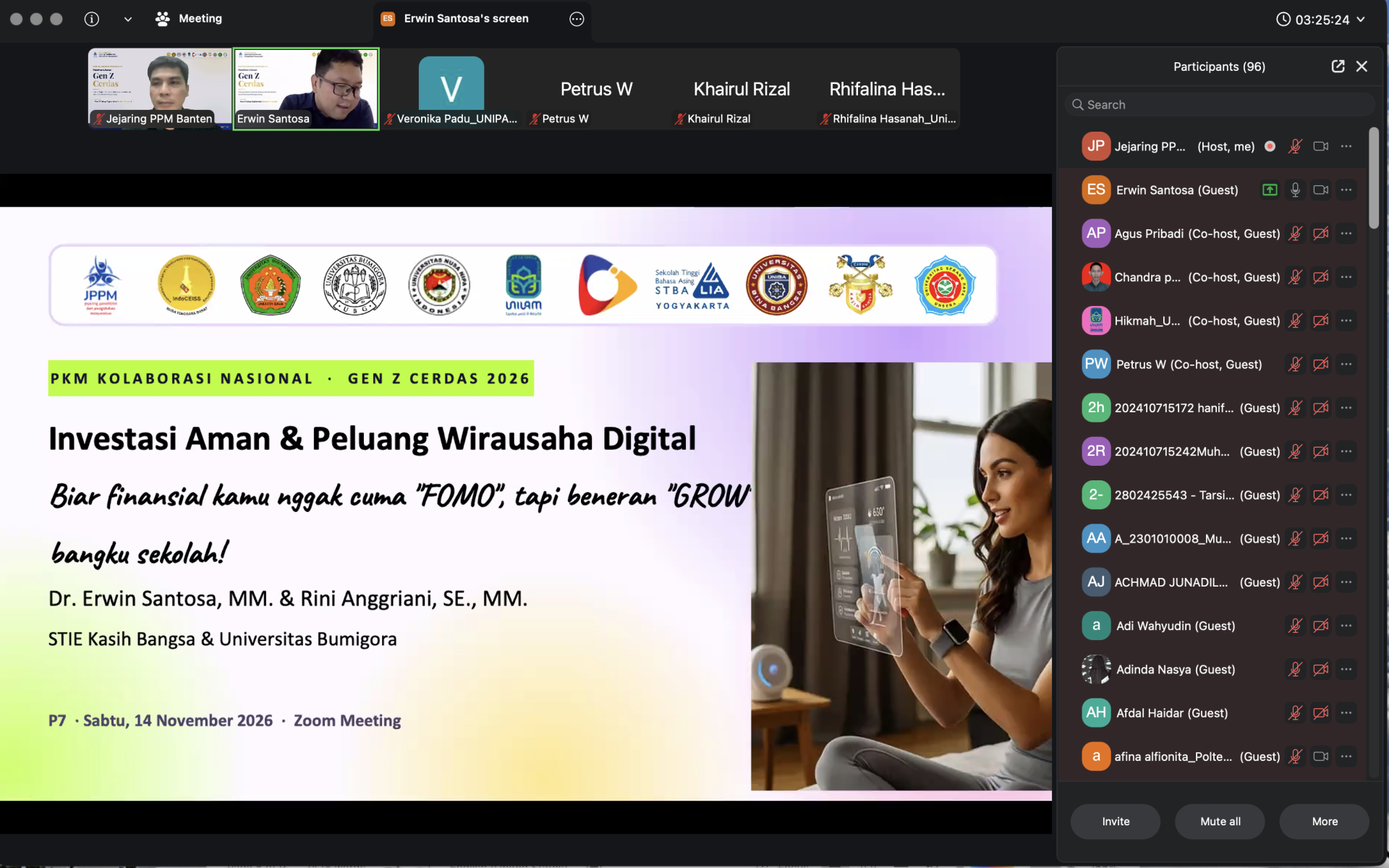
Serang, 14 November 2026 – "So that your finances don't just have FOMO, but actually GROW since school!" The invitation opened the fourth session of Gen Z Literacy Training...