Nusa Nipa University Equips Gen Z to Think Critically in Facing Hoaxes, Deepfakes and Artificial Intelligence
JPPM Editorial Team 3 min read 13 views
Serang, 14 November 2026 – From Maumere, Flores, two Nusa Nipa University lecturers greeted Smart Gen Z Literacy Training participants in the second session. The III National Collaborative PkM activity, which was organized by the Research and Community Service Network (JPPM) together with collaborating universities, was attended by 103 participants out of 208 registrants who took part in the activity online via Zoom Meeting.
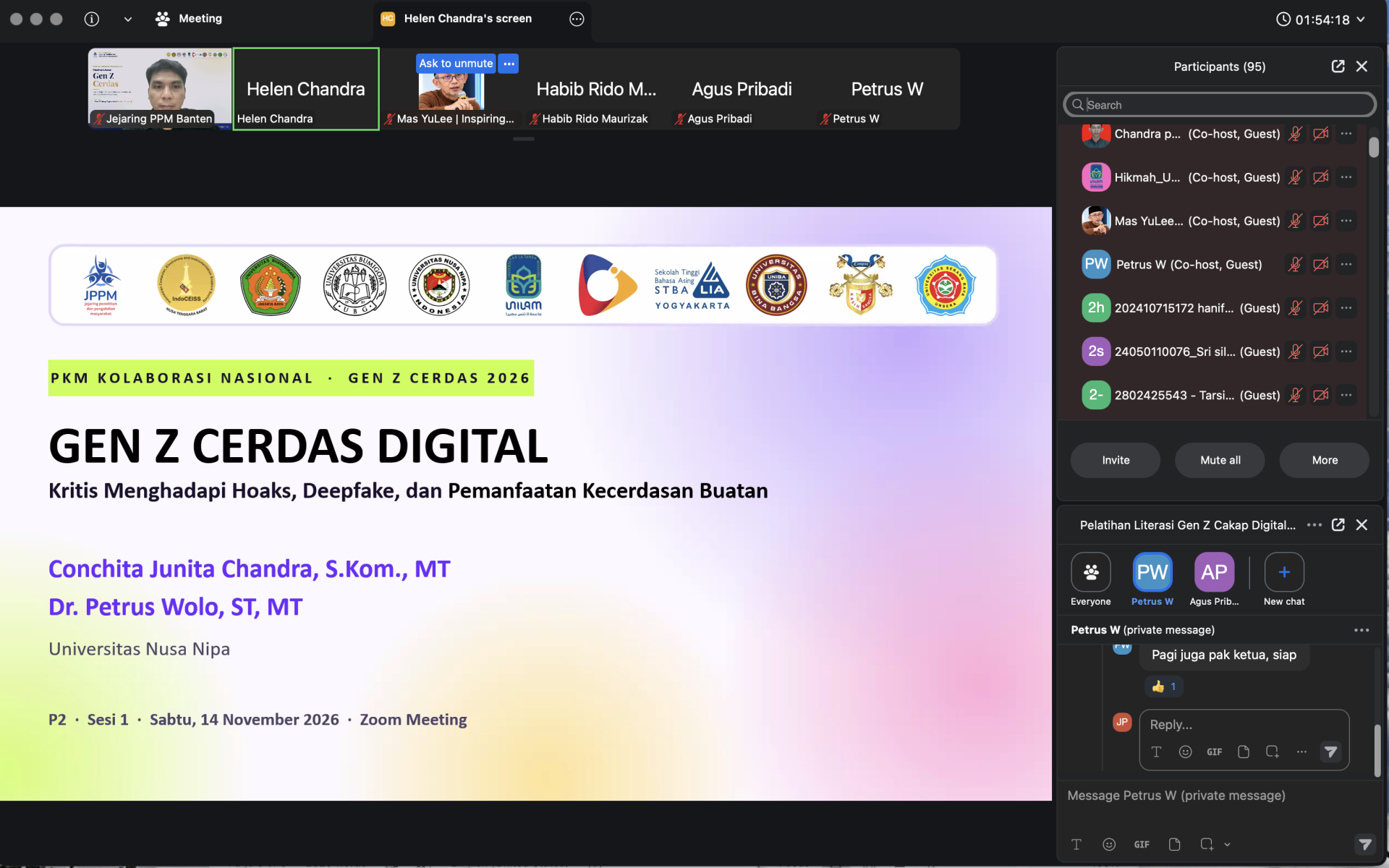
This session discusses the material "Critical Literacy Facing Hoaxes, Deepfakes, and the Utilization of Artificial Intelligence" presented by Conchita Junita Chandra, S.Kom., M.T.andDr. Petrus Wolo, S.T., M.T. from Nusa Nipa University.
The competence of both speakers is very relevant to the theme presented. Conchita Junita Chandra has been a lecturer in Informatics Engineering at Nusa Nipa University since 2009, a graduate of S1 Informatics Engineering, AKPRIND Yogyakarta Institute of Science & Technology and Masters in Informatics Engineering, Atma Jaya University Yogyakarta. His areas of expertise include information systems and software engineering, as well as special attention to digital literacy and media ethics. Dr. Petrus Wolo holds a Doctorate in Computer Science from Gadjah Mada University, with research focusing on artificial intelligence, especially artificial neural networks and decision support systems, which has been published in international journals and IEEE. A deep understanding of how AI works makes the explanation of deepfakes and the use of artificial intelligence in this session more complete.
The resource person opened the session with data from a survey on Indonesia's digital literacy status, then invited participants to differentiate between three terms that are often confused: hoax, misinformation and disinformation. An example close to students' daily lives, namely a chain message on WhatsApp offering a scholarship of IDR 10 million for the first 100 applicants via a link. When the message is forwarded without realizing its falsity, misinformation occurs. Participants were also invited to understand why hoaxes spread easily: emotions make people act faster than they think, social media algorithms expand busy content, and FOMO encourages people to share information without checking it.
The discussion continues to deepfakes, namely images, audio or videos engineered by artificial intelligence that can be used for entertainment and education, but also for hoaxes and fraud. As case studies, the resource person presented a number of examples that have become popular, including the Ratna Sarumpaet persecution hoax (2018), the hoax about seven containers of ballots being cast (2019), hoaxes about natural disasters, a doctored photo of Pope Francis wearing a puffer jacket (2023), a deepfake video of Tom Cruise on TikTok (2021), and fraud with AI-based artificial voices. Participants are invited to discuss how this content can deceive many people.
The session then moves into practice. Participants are guided to check the veracity of information through fact-checking sites such as TurnBackHoax.id and CekFakta.com, compare it with credible media channels and Komdigi, and carry out a reverse image search using Google Lens to trace the original source of an image. The resource person also discussed the ethics of using AI in learning, including the risk of plagiarism, and showed the difference between prompts that are good for understanding the material and prompts that simply ask for answers to assignments.
At the end of the session, participants answered a short quiz: what should they do when they receive photos of a disaster that claims to have occurred today? The best answer is to check the source, date, and do a reverse image search before sharing. The session closed with three key messages: convincing viral content, photos and voices are not necessarily true; get used to checking facts and comparing them with original sources; and use AI to learn critically, honestly and responsibly.
Serang, 14 November 2026 – The Smart Gen Z Literacy Training Series entered its final session late in the afternoon. National Collaborative PkM Activity III which was held...
Serang, 14 November 2026 – After the lunch break, the Smart Gen Z Literacy Training participants returned to the Zoom room for the fifth session. National Collaborative PkM Activities III...
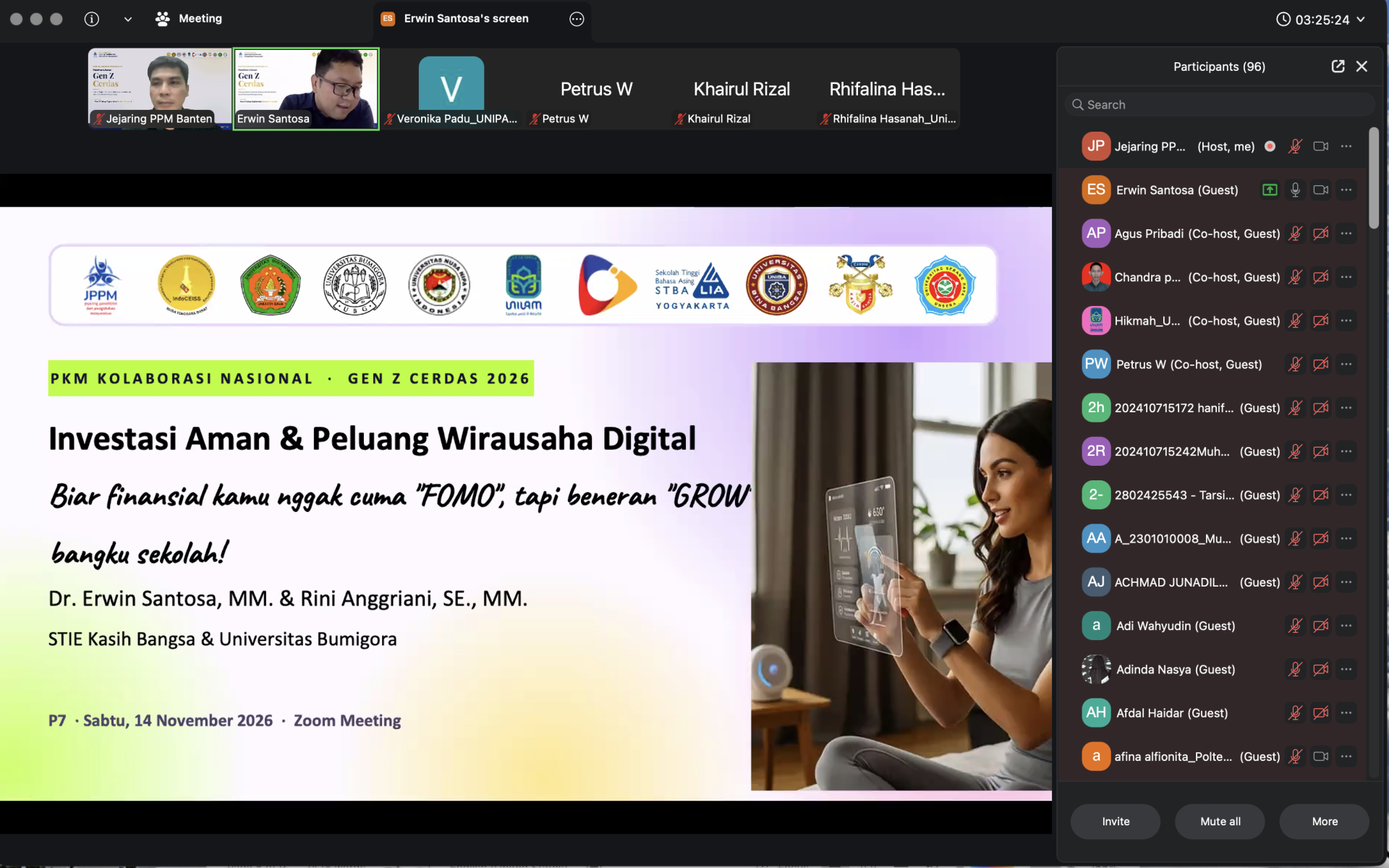
Serang, 14 November 2026 – "So that your finances don't just have FOMO, but actually GROW since school!" The invitation opened the fourth session of Gen Z Literacy Training...