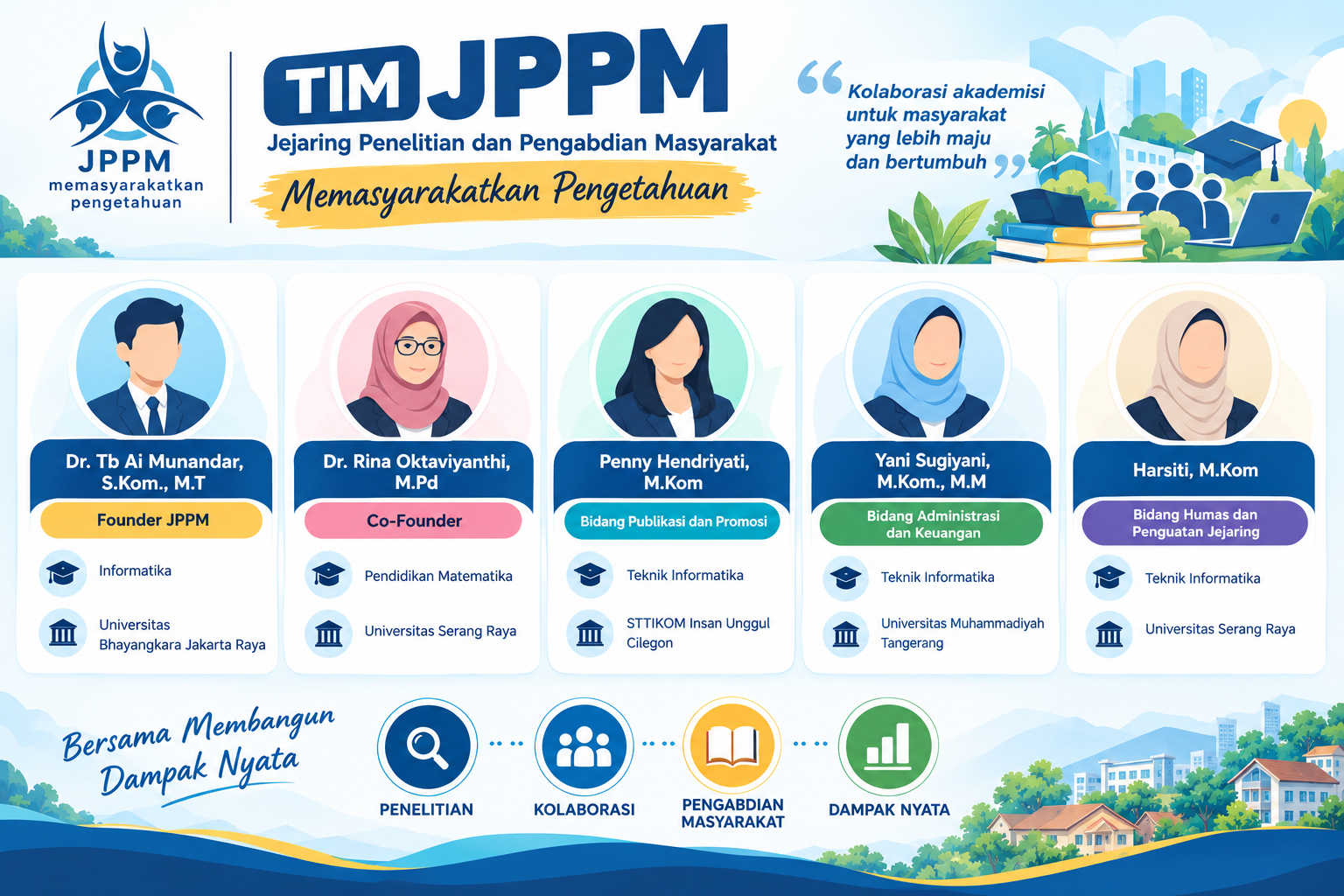
At the end of June 2020, a group of lecturers from various universities in Banten Province held an intensive discussion regarding the challenges in carrying out the "dual dharma" of lecturers - namely the obligations of research and community service. From that initial meeting, on June 30 2020, the Research and Community Service Network (JPPM) was officially established. The name and structure of the organization were decided together to become an umbrella for collaboration between lecturers, with the aim of facilitating synergy, exchange of ideas, as well as planning research and service activities that complement each other.
In the formation stage, JPPM emphasized the importance of inclusivity and openness. Every member—both senior and junior faculty—is encouraged to contribute expertise, networks, and resources. Through the mechanisms of regular meetings, online forums, and short workshops, JPPM members can identify their individual needs, formulate research theme priorities, and design service programs that are right on target. This approach ensures that each activity proposal arises from collaborative discussions, not unilateral initiatives.
One of the main obstacles identified is that many lecturers have difficulty finding suitable service locations and local partners. Apart from that, the lack of a budget sometimes means that activity proposals are abandoned before they are even submitted. JPPM then designed a "Partner Bank and Location"—a database containing contact information for community organizations, village governments and NGOs in the Banten region—as well as a transparent "Budget Distribution Scheme", so that each member can receive financial support proportionally according to their contribution.
Furthermore, JPPM also facilitates training in preparing competitive grant proposals, financial reporting and project management. In each mentoring session, members are guided on how to combine data-based research with service activities that have real impacts. This model has resulted in several proposals being successfully funded, as well as creating networks between study programs on various campuses, thereby enriching interdisciplinary perspectives.
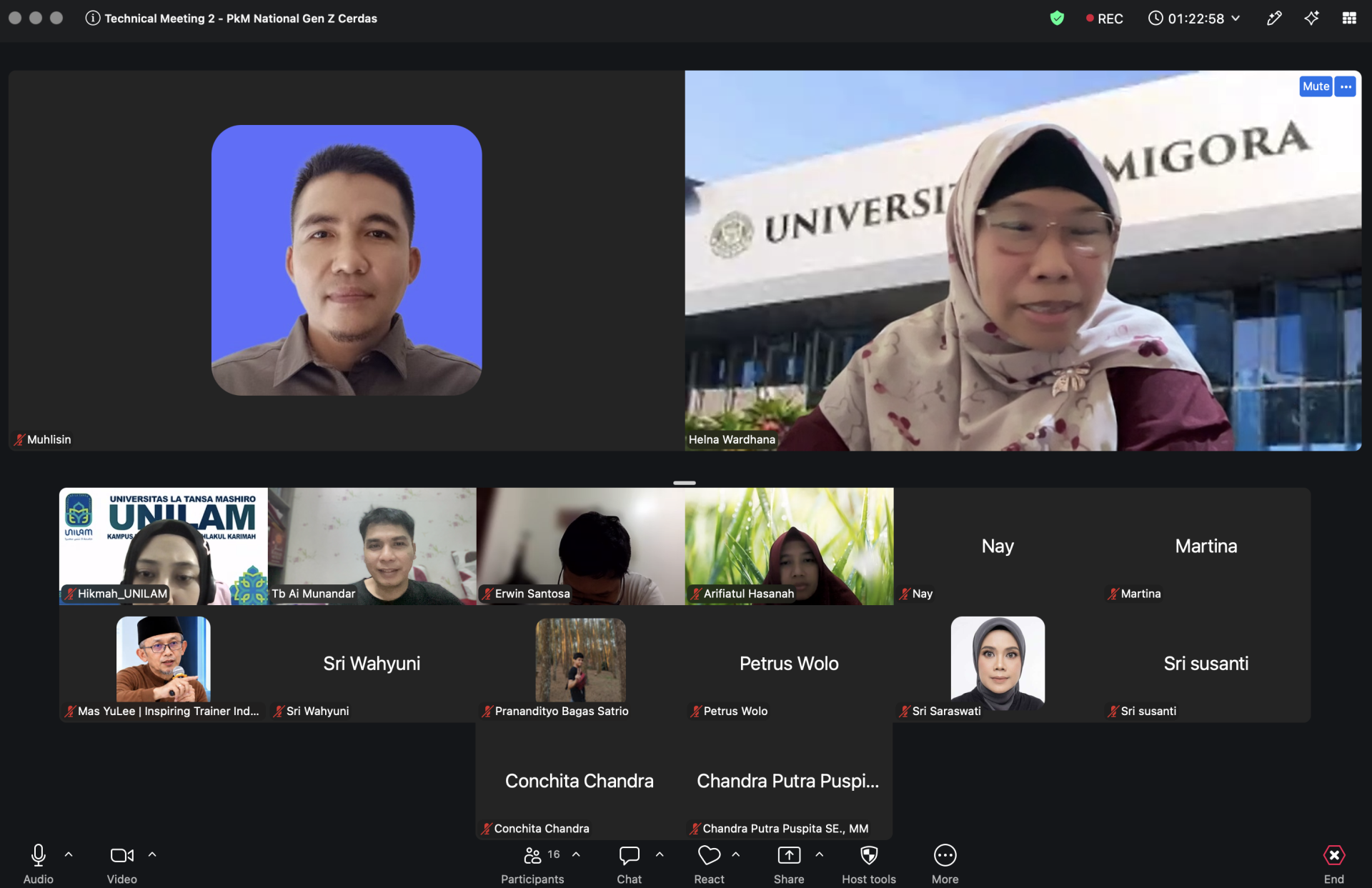
As time goes by, JPPM expands the scope of activities by holding public seminars, research methodology workshops, and service program evaluation workshops. Each activity is designed to be accessible to lecturers from any university in Banten, including lecturers in remote locations. The result is an increase in the productivity of scientific publications and the implementation of community empowerment programs, especially in the education, health and environmental sectors.
In the future, JPPM is committed to continuing to optimize this collaboration platform by utilizing digital technology—such as activity monitoring dashboards and mobile applications—as well as establishing partnerships with national and international institutions. In this way, it is hoped that JPPM will not only become a bridge for the implementation of the dual dharma of lecturers in Banten Province, but also a research-service partnership model that can be replicated in other regions.
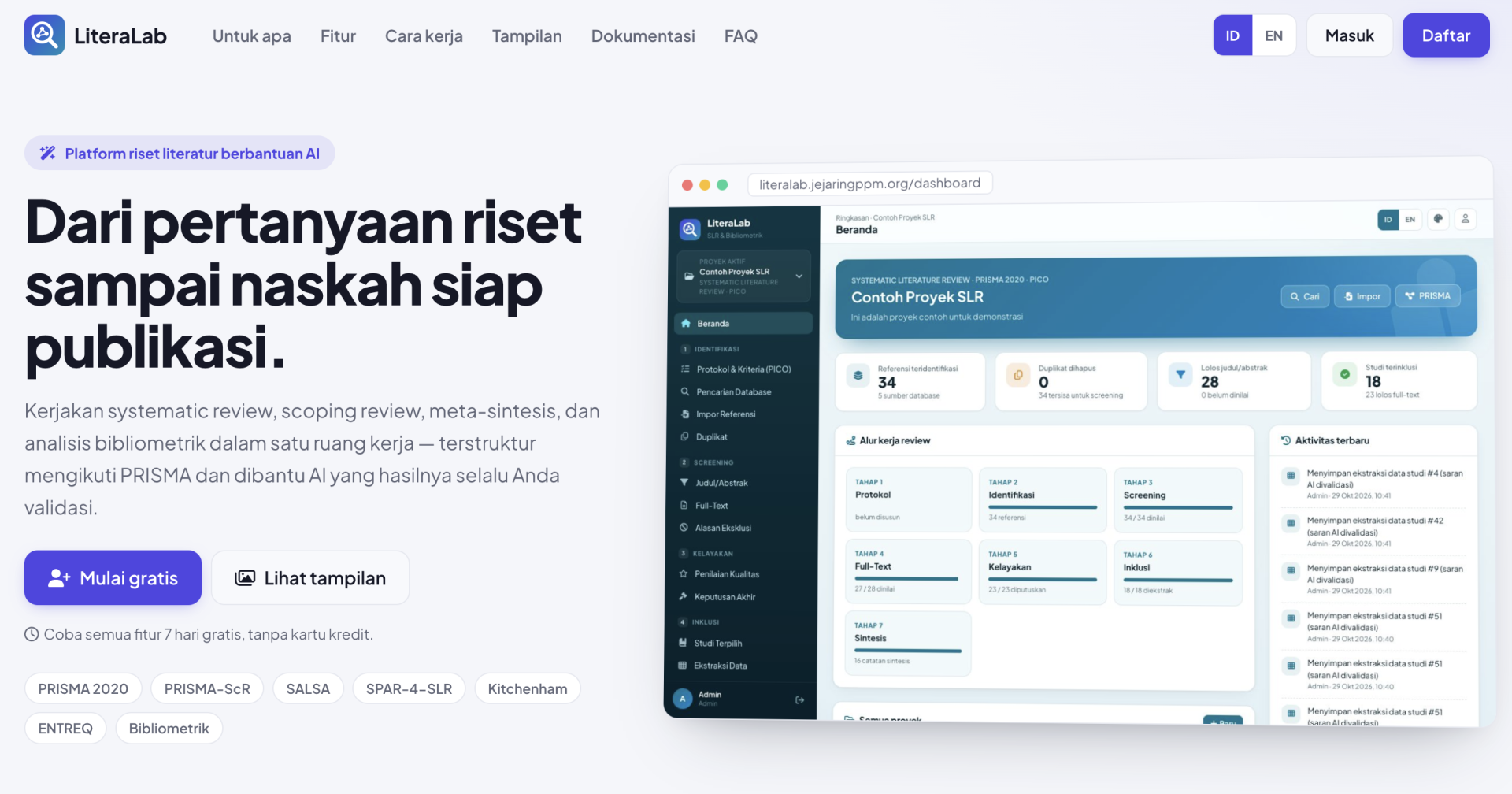
Serang, 29 October 2026 – Network for Research and Community Service (JPPM) launched LiteraLab, an artificial intelligence (AI) assisted literature research platform that...
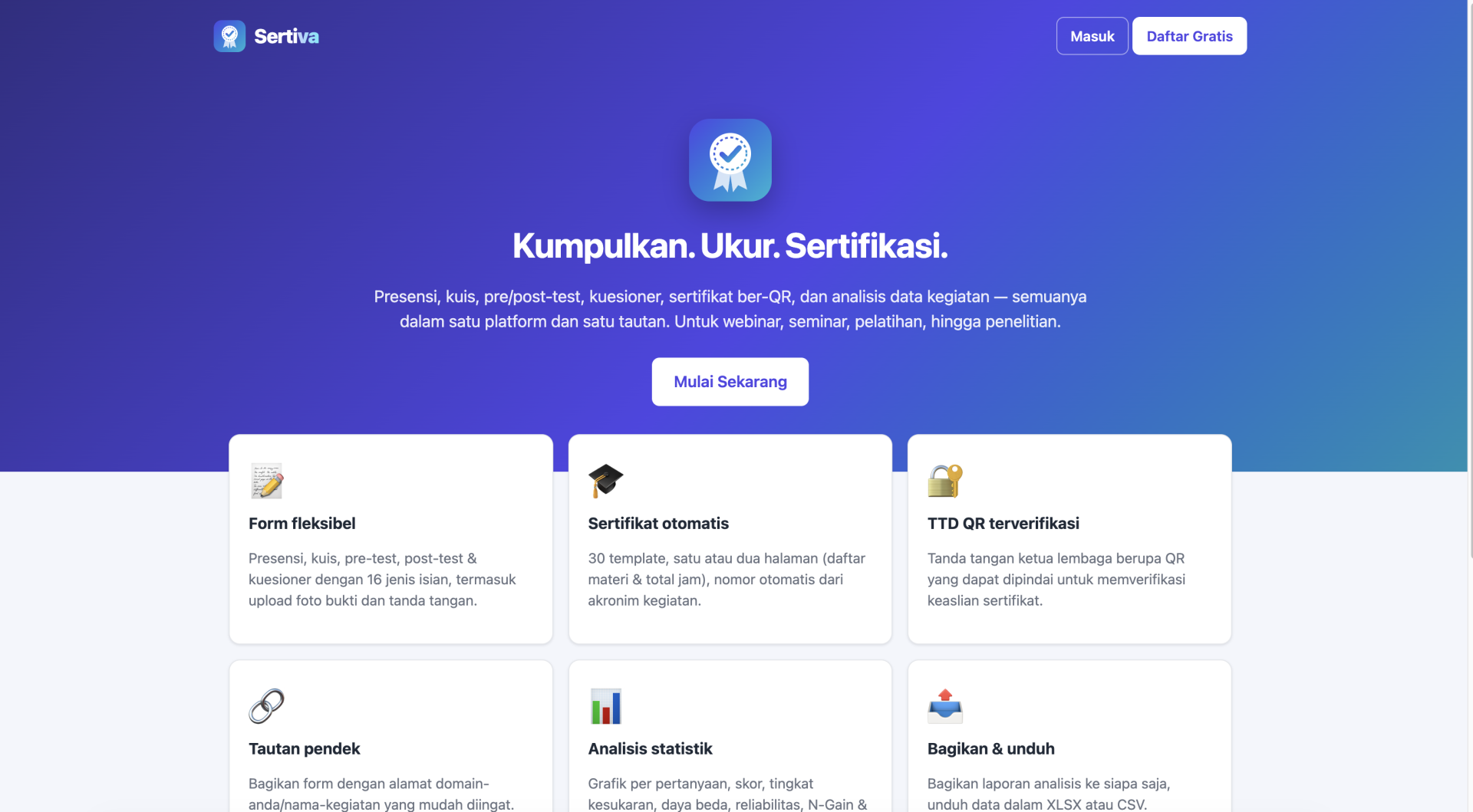
Serang, 27 October 2026 – Network for Research and Community Service (JPPM) developed Sertiva, a digital platform that integrates attendance, quizzes, pre-test...